Energy Efficiency Is About the Whole Window
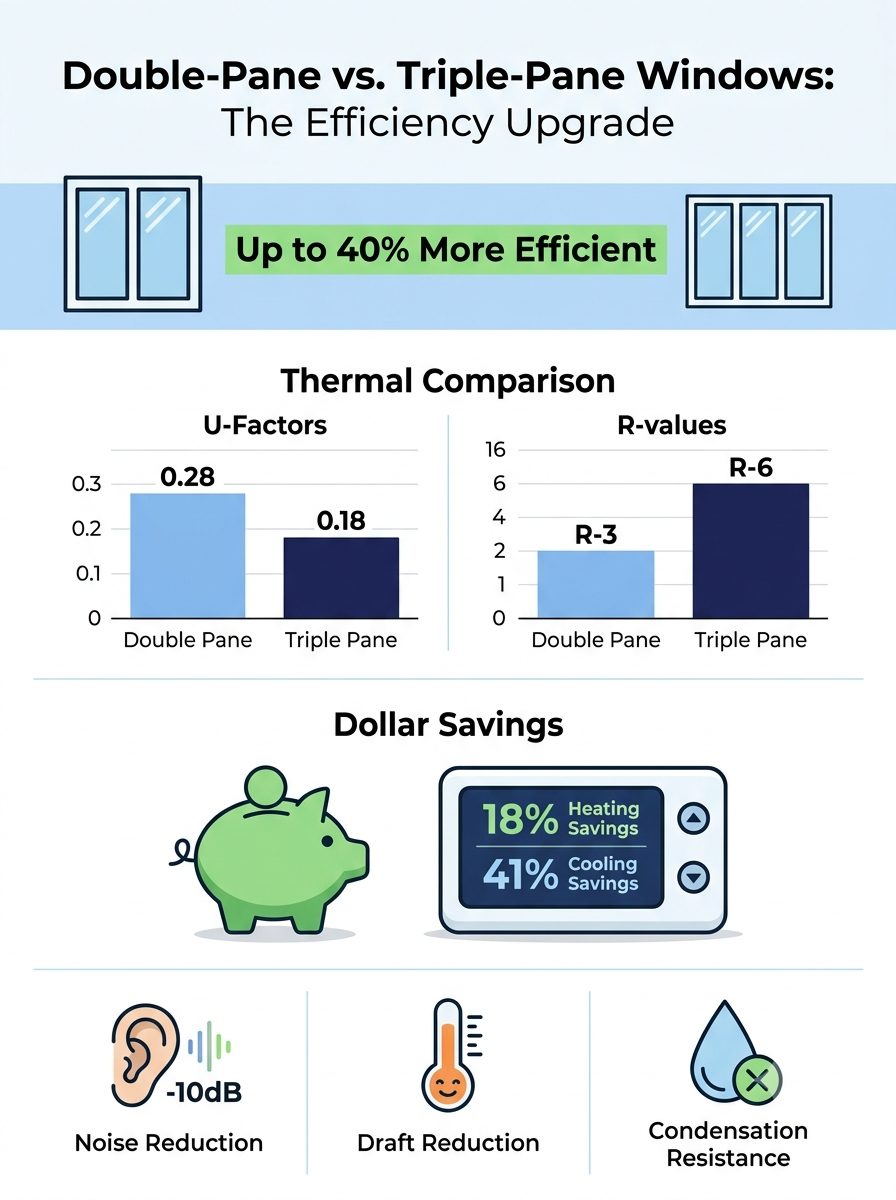
Homeowners often begin an energy-efficient window project after noticing winter drafts, cold rooms, summer heat near sun-exposed glass, condensation between panes, or aging windows that no longer operate or seal as they should. The phrase energy efficient can sound simple, but window performance comes from several parts working together. The insulated glass package matters, including low-emissivity coatings, gas fills, pane spacing, and whether the unit uses two or three panes. The frame and sash matter because they affect air tightness, thermal performance, durability, and operation. Installation matters because even a high-performing replacement window can disappoint if the opening around it is not properly fitted and sealed. We help homeowners compare those elements as a system.
The right upgrade depends on the house and on what you want to improve. A south- or west-facing room with large glass areas may have different needs than a shaded bedroom that feels cold in January. An older wood window with loose sashes presents a different problem from a newer insulated unit with a failed seal. We look at orientation, size, existing window condition, room use, comfort concerns, and project budget before narrowing the options. That allows us to recommend windows based on practical performance instead of a single label or marketing claim. In some homes, triple-pane glass is worth strong consideration. In others, a carefully selected double-pane package can provide the right balance of comfort, performance, cost, and appearance.
Building an Efficient Replacement Window Package
A useful energy-efficiency conversation starts with the glass but does not end there. We review insulating glass options, low-emissivity coatings, frame systems, weatherstripping, spacer systems, sash design, and how the window will be installed into the existing opening. We also discuss whether the project is intended to solve a specific comfort problem or update the whole home. That distinction affects where upgraded glass packages may be most valuable. Large windows, exposed elevations, bedrooms, family rooms, and spaces where people sit close to the glass often deserve particular attention. We keep the recommendation tied to how the home is used rather than assuming every opening should receive the exact same configuration.
Whole-home efficiency upgrades
We can plan a coordinated replacement package across multiple rooms while accounting for different window sizes, orientations, and operating styles.
Drafty window replacement
If air leakage is a major complaint, we evaluate both the condition of the existing window and how the replacement unit will be fitted and sealed.
Sun-exposed window upgrades
Glass selection can be adjusted for rooms affected by strong sun and unwanted heat, while still considering natural light and appearance.
Cold-room improvements
Replacement windows can help reduce the uncomfortable cold-zone effect that develops around older or lower-performing glass.
Failed-seal replacement
Cloudy or fogged insulated glass may indicate a seal failure. We can assess whether replacing the full window makes sense based on age and condition.
Phased energy upgrades
For larger homes, we can prioritize the most uncomfortable rooms or elevations and create a sensible sequence for future phases.